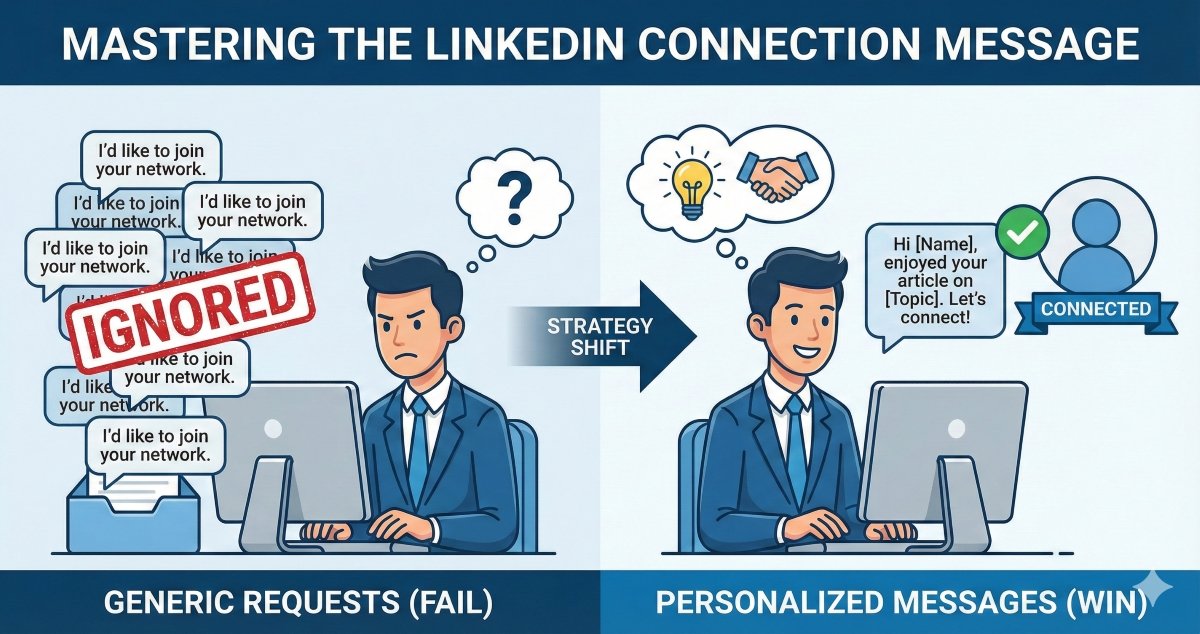
Sending a LinkedIn cold DM can feel like shouting into the void. You craft what you think
is the perfect introduction, hit send, and then wait… only to hear absolutely nothing back from the recruiter or
hiring manager.
The problem is not that people on LinkedIn do not want to network. The problem is that 95% of connection requests
sound exactly the same. They are either overly formal, aggressively salesy, or completely generic. If you want to
build a network that actually helps your career, you need a strategy to write connection messages that command
attention and prompt a response.
Key Takeaways
- Personalize Every Request: Never use the default LinkedIn cold DM. Always
include a customized note detailing why you want to connect. - Lead With Value, Not Asks: Do not immediately ask for a job referral. Focus on shared
interests, mutual connections, or insightful commentary first. - Keep It Brief: You have 300 characters. Make every word count by being concise and clear
about your intentions.
Why Your Current LinkedIn Cold DM Fails
Most job seekers treat LinkedIn outreach like a numbers game. They find 50 recruiters at their target company and
blast out identical requests. This spray-and-pray approach rarely works because it ignores the human element of
networking.
When a hiring manager receives a generic LinkedIn cold DM such as, “I’d like to add you to my professional
network,” they have no incentive to accept. They do not know you, they do not know what you want, and they assume
you are going to immediately ask them for a favor once they approve the connection.
To succeed, you must reverse this dynamic. Your outreach should prioritize building a relationship rather than
immediately extracting value. A successful message creates a low-pressure open loop that invites conversation.
🚀 Free Tool: Cold DM Architect
Generate non-spammy connection requests.
📨 Cold DM Architect
Length: 0/300 chars
The Anatomy of a Perfect Connection Request
A high-converting LinkedIn cold DM follows a specific structure. You must navigate the 300-character limit
efficiently while establishing rapport and credibility.
Step 1: The Contextual Hook
Start your message by establishing why you are reaching out to this specific person. Did you read their recent
article? Did you attend the same university? Are you both attending an upcoming virtual event?
Providing immediate context proves you have done your research and you are not just blindly clicking the connect
button. For example: “Hi Sarah, I really enjoyed your recent post about the shift to asynchronous work.”
Step 2: The Credibility Marker
Briefly state who you are, but frame it around shared relevance rather than a desperate pitch. Mention your current
role or industry focus to show you are a peer, not just someone seeking a handout.
A good credibility marker looks like this: “As a product designer also navigating the B2B SaaS space, your insights
on user retention really resonated with me.”
Get the Tool: The Resume Auditor
Streamline your job application process with our powerful
AI-driven Resume Auditor. Analyze, optimize, and beat the ATS with ease!
Step 3: The Low-Friction Ask
Finish your LinkedIn cold DM with a soft request to connect. Do not ask for a 30-minute coffee chat or a
referral in the first message. Your only goal right now is to get them to accept the connection so you can build the
relationship over time.
End with a simple, friendly sign-off: “I would love to connect and follow your future updates.”
Strategies for Reaching Out to Recruiters
Networking with recruiters requires a slightly different approach. Recruiters are actively looking to fill roles, so
they are generally more receptive to direct outreach, provided it is highly relevant.
Target the Right Recruiter
Do not message the VP of Talent Acquisition for a junior engineering role. Search LinkedIn to find the specific
technical recruiter or campus recruiter who handles your target department. Reaching out to the correct party
drastically increases your response rate.
Position Yourself as a Solution
When sending a LinkedIn cold DM to a recruiter, immediately highlight how you map to an open role. For
example: “Hi David, I see you are recruiting for the Senior Frontend role. With 5 years of React experience and a
background in fintech, I applied online and wanted to connect directly.”
Following Up Without Being Annoying
Accepting a connection request is just step one. To turn that connection into an actual career asset, you must follow
up intelligently.
The Waiting Game
Wait 24 to 48 hours after they accept your connection request before sending a follow-up message. Do not immediately
pounce on them the second the notification comes through. Let the connection breathe.
Providing Value First
When you do follow up, aim to provide value. Share an article relevant to their industry, comment thoughtfully on
their recent posts, or congratulate them on a company milestone. Establishing yourself as a valuable voice in their
feed ensures that when you finally do make a request, they are eager to help.
Frequently Asked Questions
Should I always include a note with my connection request?
Yes. Sending a blank request relies entirely on them visiting your profile to figure out who you are. A personalized
note provides immediate context and significantly increases your acceptance rate.
What if I do not have anything in common with the person?
If you lack mutual connections or shared experiences, anchor your LinkedIn cold DM to their recent
activity or company news. Commenting on an article they shared proves you have taken a genuine interest in their
professional output.
How long should a LinkedIn cold DM be?
LinkedIn restricts connection requests to 300 characters. Aim to use about 200 to 250 characters so your message is
concise, easy to read on mobile, and gets straight to the point.
Why is my connection request pending for weeks?
Some users simply do not check their pending requests frequently. Others may have dismissed it if the message seemed
generic. Do not take it personally; focus your energy on engaging with active users who regularly post content.
Is it okay to ask for a job referral immediately?
No. Asking for a referral in the first message is the fastest way to get ignored. Build rapport first. A referral
requires them to vouch for your professional capabilities, which they cannot do if they just met you online seconds
ago.